
Connecticut Farms Church History
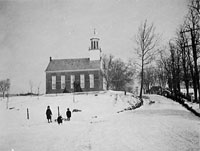
In the summer of 1667, the Rev. Abraham Pierson and his followers from Connecticut traveled for weeks under difficult circumstances to find a new settlement. The beautiful land they chose was outside Elizabethtown, fertile with an abundance of streams and within a few hours of the port. They named it "Connecticut Farms". From here, they traveled four or five miles, each way, every Sunday, through Indian country, by horse and wagon, in all kinds of weather, over dusty or muddy "roads" to attend church in Elizabethtown. Tiring of this travel in 1730, they erected a frame structure on the rise of the hill, along the main road and named it after the town.
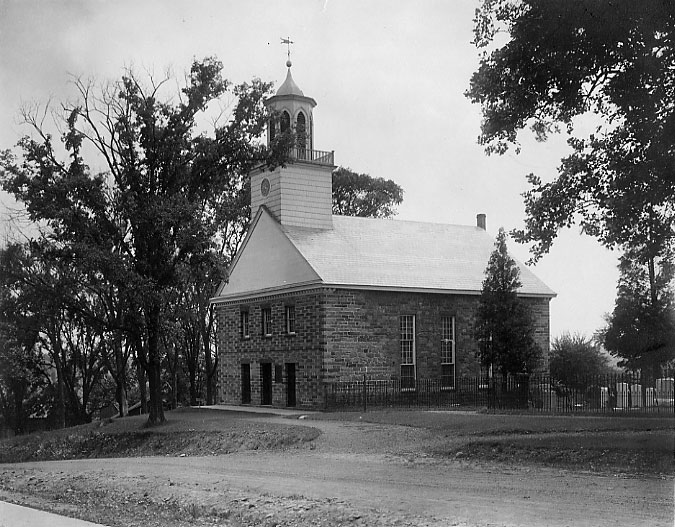
The church and community prospered for the next fifty years until war came to Connecticut Farms. On June 8, 1780, after their defeat at Springfield, retreating British and Hessian troops pillaged and ransacked the town, shot Rev. Caldwell's wife at the Parsonage, and burned most of the buildings, including the church. All records of that time were lost. Undaunted and with some help from two neighboring churches, the farmers began to rebuild on the same site. On Sunday morning, one could see the parishioners marching along with their benches, boxes, boards and chairs, as there were no pews.
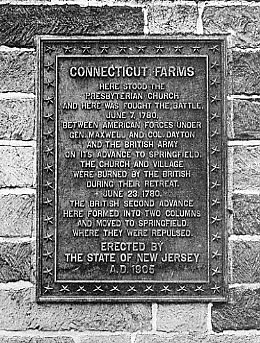
The 1800's were not always easy. In 1806, the Sunday school was started in Potter's corncrib. At times, finances to support the church were sparse and the Trustees sold the grass and apples from the Church orchards and cemetery. The congregation went through years of decline and revival, as did the country. A new manse was built just after the turn of the century and additions to the original structure were added in 1920 and 1949. The membership continued to grow. In 1970, the church and cemetery were designated as an historic site - the first in New Jersey to be listed in the Register of Historic Places.
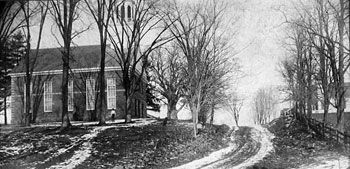
In 275 years, the congregation called Connecticut Farms has been served by seventeen ministers and has had its share of peaks and valleys. We are now in a time of renewal and growth. While we value our history, we are determined to shape the future with a ministry of compassion and outreach.
Yesterday... ...and today.
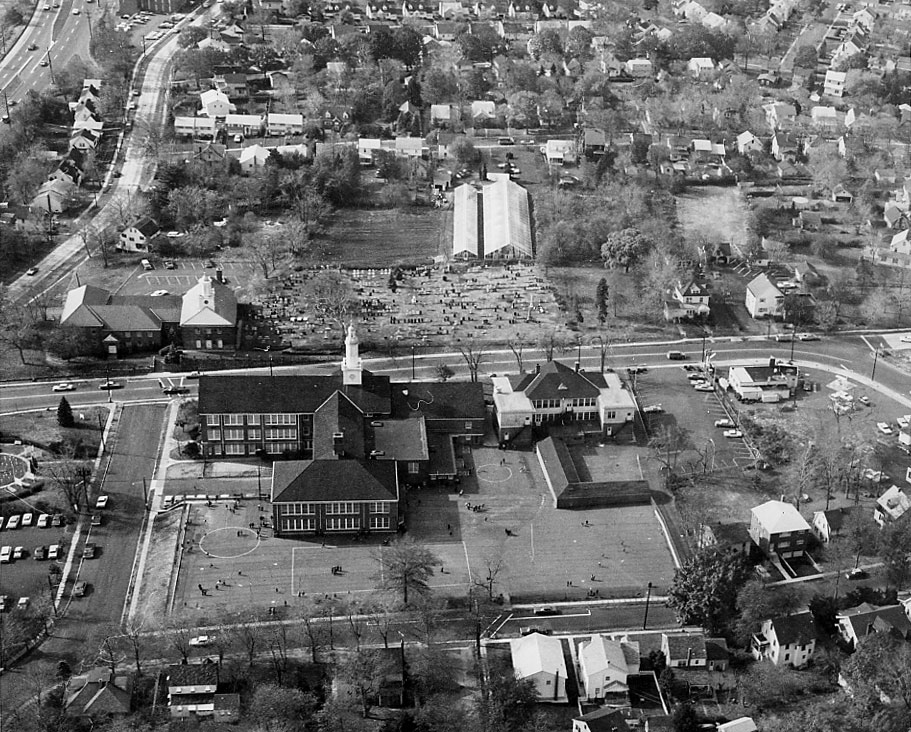
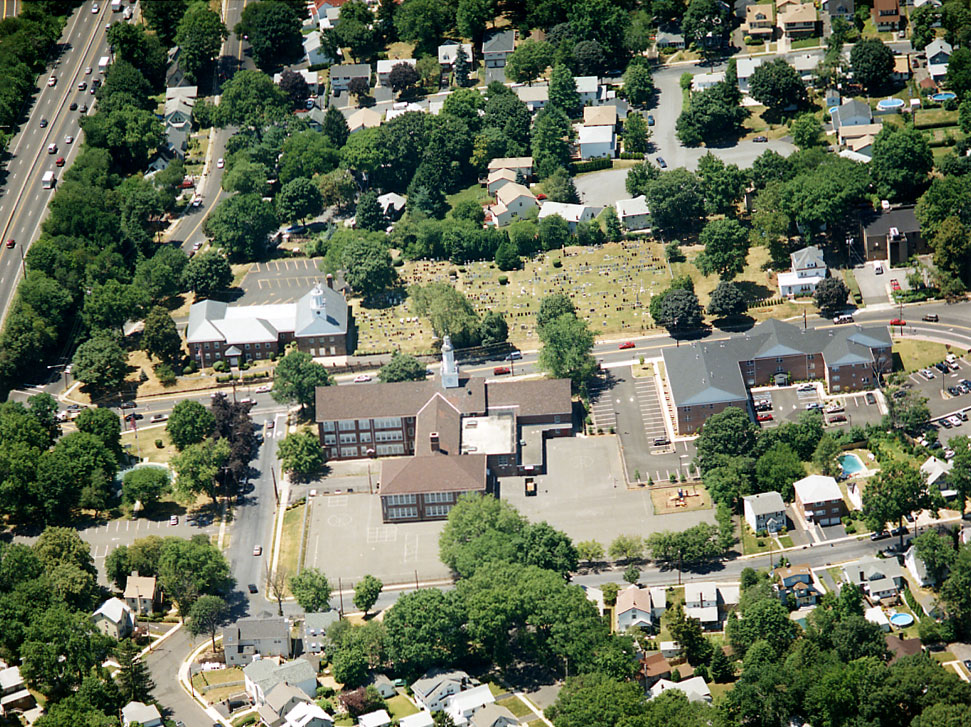
Historically Speaking
You will not find them in the Bible, but many cherished Easter traditions have been around for centuries. The most prominent secular symbol of the Christian holiday, the beloved "Easter Bunny," reportedly introduced to America by German immigrants, who brought them their stories of an egg-laying hare.
The Bible makes no mention of rabbits who deliver decorated eggs on Christianity's more important holiday. The origin of this myth is unclear, but rabbits are known to be prolific procreator's ancient symbol of fertility and new life. The Easter Bunny first arrived in the 1700's to America and the custom spread and expanded to include chocolate, baskets and gifts.
Easter Eggs are linked to a pagan tradition. Eggs are an ancient symbol of new life and has been associated with the pagan festival of Spring. From a Christian perspective, Easter eggs are said to represent Jesus' emergence from the tomb and resurrection. One explanation for the custom of decorating eggs for Easter was that formerly a forbidden food during Lent, people painted and decorated them to mark the end of the period of penance and fasting and ate the eggs on Easter as a celebration.
Dyeing of Easter eggs may have a deeper religious connection as well as a tradition relating to Mary Magdalene, the first person to see Jesus after the Resurrection. She was said to have brought eggs to Jesus' crucifixion and the blood from his wounds fell on the eggs, coloring them red. And there are at least two more legends with Mary and eggs turning red.
Churches are often decorated with flowers, a significant theme for Easter is rebirth, which flowers symbolize. The traditional Easter flowers include Easter Lilies, which are believed to have grown in the Garden of Gethsemane, the site of Jesus' arrest. The other flowers are pussy willows, daffodils, narcissuses and red tulips, which symbolize Jesus' shed blood.
Further historical information:
Check out the historic Connecticut Farms Church Cemetery
A web site devoted to the history and people of the Connecticut Farms Cemetery. The site includes many photos, including historical headstones. Many of the Epitaphs are documented. The site even includes a searchable database of those interred.
Union Township Historical Society Photos
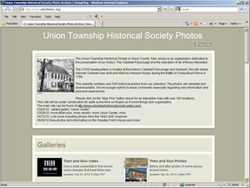
This web site has many photo galleries from the Union Historical Society in Union. There are many before and after images as well as maps.
The Caldwell Parsonage Museum
To explore more of the rich colonial heritage Union (formerly Connecticut Farms) has to offer, visit the Caldwell Parsonage, Caldwell Avenue, Union, New Jersey. Hours by appointment and special events. Email: caldwellparson@aol.com. Phone: 908-687-7977. Admission is free.
The following brochure (in PDF format) is available for download: here. It was shared with us by Mr. Michael Yesenko, President of the Union Township Historical Society.
Built by Connecticut Farms Church in 1782 - 1783 after the original parsonage was burned down, it served as the church parsonage for most of the nineteenth century. The need for extensive repairs and its distance from the church prompted the church to built a new parsonage (manse) adjacent to the church in 1901, on Stuyvesant Avenue. The Parsonage house as well as the Church are on the National Register of Historic Places.
Library of Congress Web Site
Connecticut Farms Church at the Historical Collections for the National Digital Library Historic American Buildings Survey / Historic American Engineering Record

In the 1930s, as a WPA project, the Federal government hired surveyors and architects to architecturally render and catalogue colonial sites throughout America. Connecticut Farms Church was among those included. A team spent several weeks at the church in 1939, crawling and climbing from cellar to steeple. These drawings provide an interesting glimpse of the church at that time. Much of the present structure remains true to the drawings. The originals are stored at the Library of Congress and can be accessed by this link.